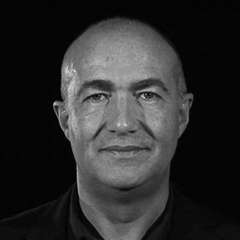
A book beside the Seine
In 1993, I bought a worn copy of Paul Christian’s Histoire de la magie from a bookstall beside the Seine. I wanted to practice my French. I became interested in something beyond the language: how an image gathers interpretations and eventually becomes part of the life of the person looking at it.
I did not find a definitive answer in that book. I found a reason to keep reading and return to the sources.
Read the sources, recognize the interpretations
My studies in History at the University of Pisa, Italy, with a focus on the history of religion, accompanied that search. I spent twelve years translating texts by Court de Gébelin, Éliphas Lévi and Paul Christian, and many hours exploring Gallica, the digital library of the Bibliothèque nationale de France.
That experience taught me to ask where a meaning comes from. A symbolic tradition also has authors, changes and debates. Recognizing them does not make a card less interesting: it lets you look more closely at what each interpretation contributes.
You can consult an edition of Histoire de la magie on Gallica. It is a historical source for esotericism, not proof that its supernatural claims are facts.
From reading a book to reading for another person
In 1998, I gave my first reading to a friend. In-person readings in Turin, Italy, followed, and later I began working online. Listening to other people’s questions, I found that the issue was no longer just what a card meant: it also mattered why that image found a place in their experience.
This is where the role of personal choice in my method began. Tarot by Rob shares that approach through a free reading you can complete at your own pace.
The cards do not decide for you
The heart of Tarot by Rob is opening a perspective rather than trying to get a single, definitive answer right. A card may help you recognize a desire, a conflict or a quality you had not put into words. What you do with that observation remains up to you.
This is why conscious choice has a place in the method: after the draw, you do more than receive images. You look at them, read their meanings and select the ones that connect with your experience.
An original method, clearly explained
The reading uses 22 major arcana. Of ten cards drawn, you choose nine in three stages of three. The questions and meanings change with the topic; the result brings together interpretations related to those choices.
The online reading is automated and uses the interpretation texts from Rob’s method. It should not be confused with a live personal conversation or a psychological assessment.
Tradition, interpretation and responsibility
A symbolic reading can coexist with critical thinking. At Tarot by Rob, we distinguish references to a tradition, an editorial interpretation of a card and the facts each person knows about their own life.
The site’s guides explain how we suggest reading the symbols. They do not present one interpretation as the only possible meaning or promise that cards can verify the future or someone else’s feelings.
A project also recognized through its art
The work of Franco Rivolli and Valeria Ferrero forms part of Tarot by Rob’s identity. The illustration is more than a background: it gives shape to the associations each person finds during a reading.
Meet the project’s artists and decks or begin a free reading.